A bar strainer, also known as a Hawthorne strainer, is part of the basic equipment of every bartender. It is not a simple kitchen sieve but a precise tool essential for straining cocktails. Without a strainer, ice cubes, fruit pulp, or herbs would end up in the glass, making the drink undrinkable. However, not every strainer serves the same purpose, and not every bartender uses it the same way. Those who work behind the bar know: a good strainer saves time, prevents waste, and ensures a clean result. But what exactly makes it stand out, how do you identify quality, and why are there so many different models?
What a bar strainer is
A strainer is a bar tool used to strain liquids from a shaker or mixing glass. Its main task is to retain solid ingredients like ice, fruit pieces, or herbs while allowing the liquid to flow into the serving glass. Unlike a kitchen sieve, a bar strainer is designed with precision: it sits directly on the shaker or glass, preventing unwanted particles from ending up in the finished drink.
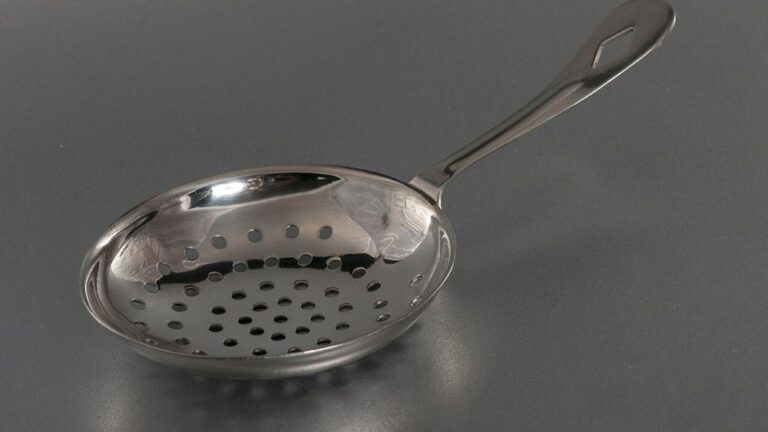
There are different types of strainers, varying in shape, size, and functionality. The most common models are the Hawthorne strainer, the Julep strainer, and the fine-mesh tea strainer (Fine Strainer). Each type has its specific uses, depending on whether coarse or fine particles need to be filtered.
How to recognize a good bar strainer
A high-quality strainer can be identified by several features. First, the material is crucial: stainless steel is standard, as it is rustproof, durable, and easy to clean. Cheap models made of coated metal rust quickly or lose their shape. The spring of a Hawthorne strainer should be taut and not bend when pressed together—otherwise, it may slip off the shaker.
The mesh size also plays a role. A standard Hawthorne strainer has relatively large openings that retain coarse ice cubes but allow fine particles like fruit pulp to pass through. For such cases, an additional Fine Strainer is used, which filters even the smallest residues with a fine mesh surface. The size of the strainer must fit the shaker: a strainer that is too small will not fully cover the opening, while one that is too large cannot be securely placed on top.
Another quality feature is the craftsmanship. Sharp edges or poorly riveted springs can injure hands or damage the shaker. A good strainer feels comfortable in the hand and can be operated effortlessly.
Where the strainer is used in bar practice
In daily work behind the bar, the strainer is indispensable. Every cocktail prepared in a shaker or mixing glass must be strained—whether it’s a classic Martini, a Whiskey Sour, or a fruity Daiquiri. Without a strainer, ice cubes would end up in the glass, diluting the drink before the guest even has a chance to taste it.
The Hawthorne strainer is the all-rounder: it fits most shakers and is suitable for most cocktails. For drinks with fruit pulp, such as a Caipirinha or a Pisco Sour, an additional Fine Strainer is used to ensure a clean result. The Julep strainer is used less frequently but is practical for mixing glasses, as it fits directly into the hand and allows for precise straining.
A common mistake is to place the strainer incorrectly. If it is only loosely placed on the shaker, ice or liquid may spill out. A good bartender presses the strainer firmly onto the shaker and stabilizes it with the index finger while tilting the shaker with the other hand. This keeps the workflow smooth and prevents anything from ending up on the floor.
Common misconceptions and misunderstandings
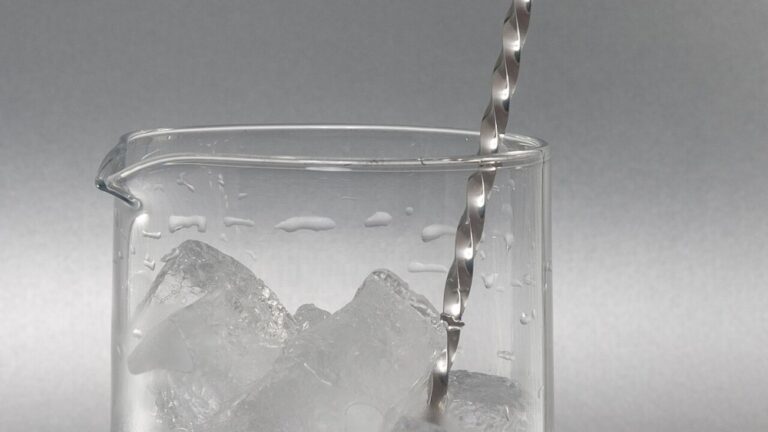
Many beginners think a strainer is only needed for shakers—but it is also used when stirring in a mixing glass. Another misconception is the assumption that a single strainer is sufficient for all cases. Those who only use a Hawthorne strainer will quickly reach their limits with drinks containing fine particles. A Fine Strainer is not a luxury but a necessity for clear, clean cocktails.
Some bartenders also believe that a strainer is only needed for certain drinks. Even a simple Gin Tonic, which is built directly in the glass, can benefit from a strainer—such as when straining ice cubes from the storage bucket to add them to the glass. A strainer is not a specialized tool but an everyday helper that should be within easy reach in every bar.
Another myth is that expensive strainers are automatically better. While there are high-end models with special features, the fit and craftsmanship are what matter most. An inexpensive but well-fitting strainer often serves its purpose just as well as a brand-name product for three times the price.
Related topics
- Shaker types compared: Boston, Cobbler, and French
- Double strain: why and how to filter correctly
Frequently Asked Questions
Can a strainer also be used in the kitchen?
In principle yes, but a bar strainer is optimized for the specific requirements behind the bar. A Hawthorne strainer, for example, is not well suited for straining pasta or vegetables, as the mesh is too coarse. Conversely, a kitchen sieve is often too cumbersome for use on the shaker. If you want to do both, you should get a separate kitchen sieve.
Do you need to clean a strainer after each use?
Yes, absolutely. Residues from fruit juices, syrups or alcohol can dry in the strainer and promote bacterial growth. A strainer should be rinsed with warm water after each use and cleaned thoroughly on a regular basis. Fine strainers in particular can trap fine particles in the mesh that can only be removed with a brush.
Why are there strainers with and without springs?
The spring on a Hawthorne strainer serves to press the strainer firmly onto the shaker and prevent it from slipping. Strainers without springs, such as the Julep strainer, are usually used for mixing glasses, where they are held directly in the hand. The spring is therefore not a quality feature, but a matter of the intended use.
Can you use a strainer without a shaker?
Yes, for example when straining ice from a storage container or filtering freshly squeezed juice. A fine strainer is also suitable for removing herbs or spices from a homemade syrup. The strainer is a versatile tool that is not only used on the shaker.