Behind the bar, every millilitre counts. The jigger is the tool that makes this precision possible. Without it, consistent drinks would be a matter of luck – and in a profession where repeatability is everything. But the jigger is more than just a simple measuring device: it is a symbol of professionalism and an indispensable companion in the preparation of cocktails, shots or long drinks. Used correctly, it saves time, prevents waste and ensures that every guest enjoys the same taste experience. Not every jigger is the same, and not every bartender uses it in the same way. This is about practicality – and why no bar should be without a jigger.
What a jigger is – and what it is not
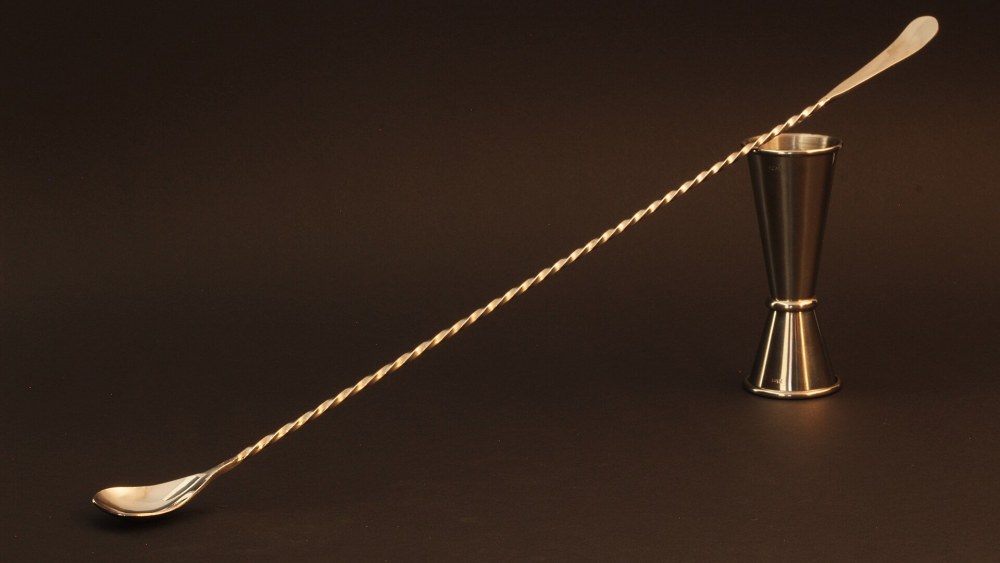
A jigger is a small, usually double-conical measuring cup made of stainless steel, glass or plastic, used in the bar for the precise dosing of liquids. The typical shape with two differently sized sides – often 15 ml and 30 ml or 20 ml and 40 ml – allows for quick work without having to switch between different tools. The name comes from English, where jigger originally referred to a unit of measurement for spirits before it was transferred to the measuring tool itself.
The jigger should be distinguished from other measuring aids such as the bar measure (a simple cylindrical measuring cup) or the shot glass. While a shot glass often only has a fixed size and is more for presentation, the jigger is purely a working tool. Even digital measuring systems or scales do not fully replace it, as they are impractical in the hustle and bustle of the bar. The jigger remains the tool of choice when it comes to speed and accuracy.
How to recognise a good jigger
Not every measuring cup is equally suitable. A high-quality jigger fits comfortably in the hand, has clear, easy-to-read markings and is made of a material that is easy to clean. Stainless steel is the standard here, as it is robust, rust-proof and dishwasher-safe. Glass jiggers may look attractive, but are more prone to breakage and often more difficult to handle. Plastic versions are rarely used in professional bars as they can become cloudy over time and absorb liquids.
The markings should be precise and durable – preferably engraved or printed so that they remain legible even after frequent use. Some jiggers have additional markings for common measurements such as 7.5 ml or 60 ml, which makes working with more complex recipes easier. The shape is also important: a jigger that is too flat or too deep makes measuring difficult, while a slightly conical shape makes pouring easier.
Balance is another important factor. A good jigger should not be too light so that it does not tip when pouring, but also not too heavy to avoid straining the wrists. Bartenders who work a lot with the jigger quickly develop a feel for which type best suits their own working style.
The jigger in practice: When and how it is used
In the bar, the jigger comes into play whenever precise dosing is required – which is the case for almost every cocktail. Whether classic drinks like the Martini, the Old Fashioned or the Daiquiri: without exact ratios, they lose their balance. The jigger is not only a tool for beginners, but also for experienced bartenders who know that even small deviations can change the flavour.
The technique is simple: the jigger is held with the smaller side facing up to measure the smaller amount first. It is then turned to use the larger side. With practice, this can be done in one fluid motion without interrupting the flow of preparation. It is important not to overfill the jigger – the liquid should be just below the rim to allow for clean pouring.
In some bars, the jigger is also used as a control tool, for example when trainees are practising measuring or when new recipes are being introduced. Even in drinks that are poured freely (such as many long drinks), the jigger serves as a reference to develop a feel for the right quantities. Those who use it consistently not only avoid mistakes, but also work more efficiently – because nothing slows down the workflow more than constant re-measuring or correcting.
Common misconceptions and misunderstandings
A common misconception is the assumption that a jigger is only necessary for beginners. In fact, even professionals use it regularly because they know that even skilled hands do not always pour evenly. Another myth is that a jigger is only used for spirits. In reality, it is used for all liquid ingredients – from juices and syrups to bitters or liqueurs.
Some bartenders skip the jigger because they believe it slows down their workflow. But when used correctly, it actually saves time: once measured, the ingredient can be poured directly into the glass or shaker without needing to adjust further. The idea that a jigger is only used in classic cocktail bars is also wrong. Even in bars specializing in modern creations or Tiki drinks, it’s indispensable—precision in quantities matters here too.
A further point is the confusion with the bar measure. While a bar measure often has only one fixed size, the jigger offers more flexibility with its two sides. Those who rely solely on a bar measure often have to measure multiple times or use several tools—impractical in the fast-paced bar environment.
Related to this
- Free Pouring – Precision without a measuring cup
- Bar tools at a glance: What you really need
Frequently Asked Questions
Can a jigger be replaced with a shot glass?
A shot glass may have a fixed volume, but it’s not a full replacement for a jigger. Shot glasses are often inaccurate, lack a second measurement side, and are primarily designed for presentation. For precision, especially with smaller quantities or varying dosages, the jigger is the better choice.
How do you properly clean a jigger?
A stainless steel jigger can be cleaned in the dishwasher without issues. If washing by hand, rinse it with warm water and dish soap after each use to prevent residue buildup. Stubborn stains can be removed with a brush or sponge. It’s important to dry the jigger thoroughly after cleaning to avoid limescale deposits.
Are there jiggers with measurement units other than 15/30 ml?
Yes, jiggers come in various size combinations, such as 20/40 ml, 25/50 ml, or even with additional markings for half portions. The right size depends on the common recipes in the bar. However, the 15/30 ml model has become the standard in many bars as it fits most classic cocktails.
Why do some jiggers have a textured surface?
A textured or ridged surface improves grip, especially when hands are wet or greasy. However, cleaning can be slightly more challenging as residue tends to settle more easily. Whether this variant is preferred comes down to personal comfort.