
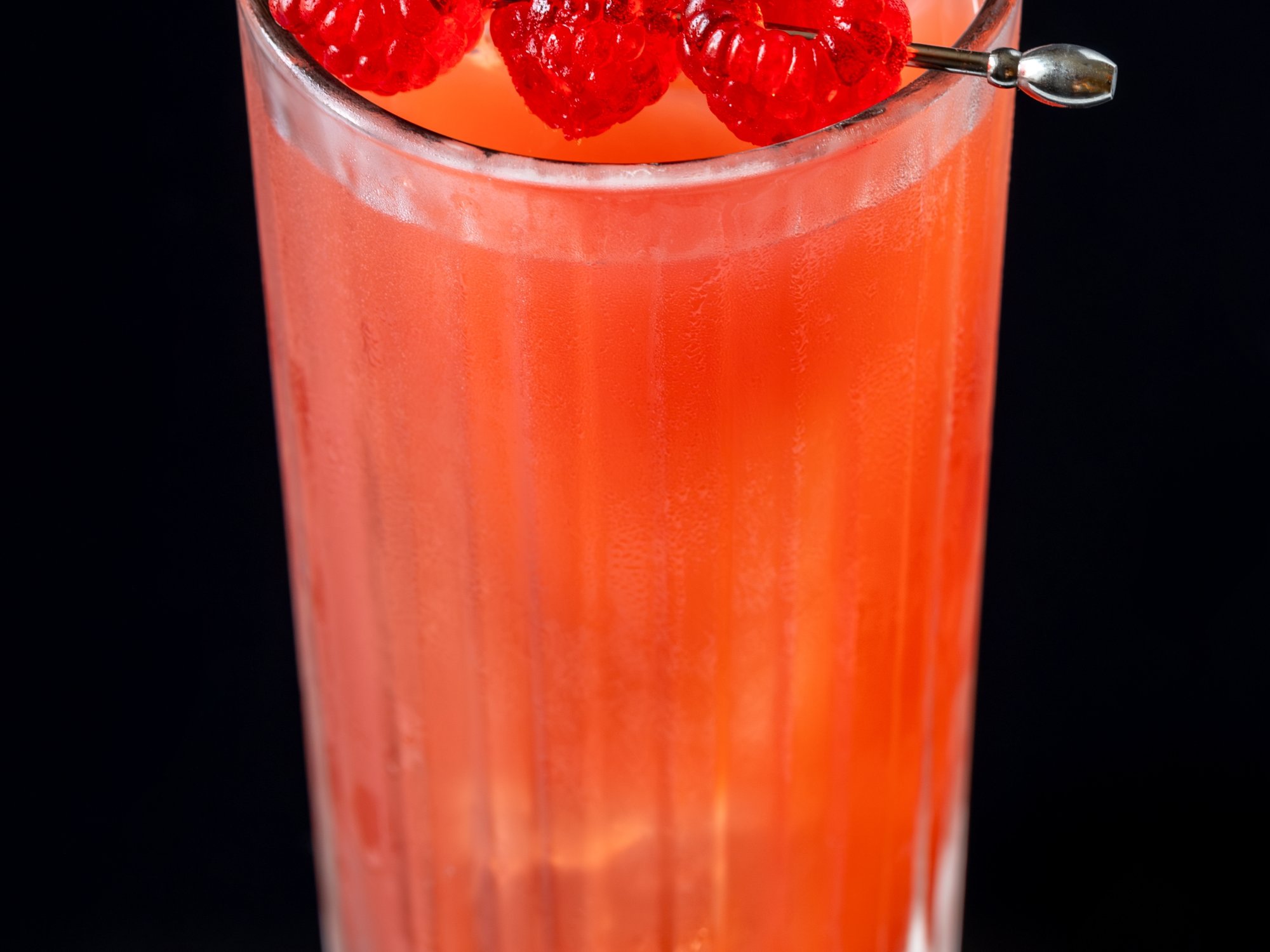
The Prince of Wales Punch isn’t a party drink, but a classic punch for the moment. Here, Cognac, maraschino and fresh fruit juice meet champagne – not as a base, but as the crowning finish. The recipe is simple, but balance is key: too much sweetness smothers the acidity, too little bitterness leaves the drink flat. It is served cold, but not ice-cold – the aromas should unfold, not freeze. A drink for connoisseurs who know that punch is more than just lemonade with alcohol.
Here’s what you need for the Prince of Wales Punch
6 cl champagne (dry, not sweet)
3 cl Cognac (minimum VSOP)
1 cl maraschino or orange liqueur (Curaçao)
2 cl freshly pressed pineapple juice or orange juice
1 dash Angostura bitters
Garnish: orange zest (fresh, without the white pith)
What matters
The champagne always comes last – not shaken, not stirred, just gently topped up. Why? Because the carbonation would otherwise dissipate and the drink would lose its lively lightness. Temperature is also crucial: the punch should be cold, but not ice-cold. Ideal is 8–10 °C – too cold suppresses the aromas, too warm makes the drink flabby. If preparing the punch for multiple guests, mix the base (Cognac, liqueur, juice, bitters) in advance and only top up with champagne when serving. This preserves freshness. Another trick: express the orange zest just before serving – the essential oils evaporate quickly and are crucial for the aroma.
Variations
- Royal Punch — Replace the Cognac with 3 cl blended Scotch whisky and use 1 cl apricot brandy instead of maraschino. The drink becomes bolder and more complex, with a light smoky note.
- Tropical Punch — Use 2 cl fresh passion fruit juice instead of pineapple juice and replace the maraschino with 1 cl passion fruit liqueur. Garnish with a passion fruit slice. Fruity and exotic, but less classic.
Frequently asked questions
Can I scale the punch for a bowl?
Yes, but keep the ratio and only add the champagne when serving. Mix the base (Cognac, liqueur, juice, bitters) in a pitcher and pour 6 cl champagne directly into the glass per serving. This preserves the carbonation.
Which champagne works best?
A dry champagne (Brut or Extra Brut) is ideal. Sweet variations like Demi-Sec overpower the aromas of the Cognac and the fruit. It’s important that the champagne is fresh and not too old – too much oxidation makes the drink flat.
Can I use a different liqueur instead of maraschino?
Yes, but make sure the liqueur isn’t too sweet. Orange liqueur (Curaçao) or a dry cherry brandy work well. Overly sweet liqueurs like Triple Sec or amaretto destroy the balance.
