
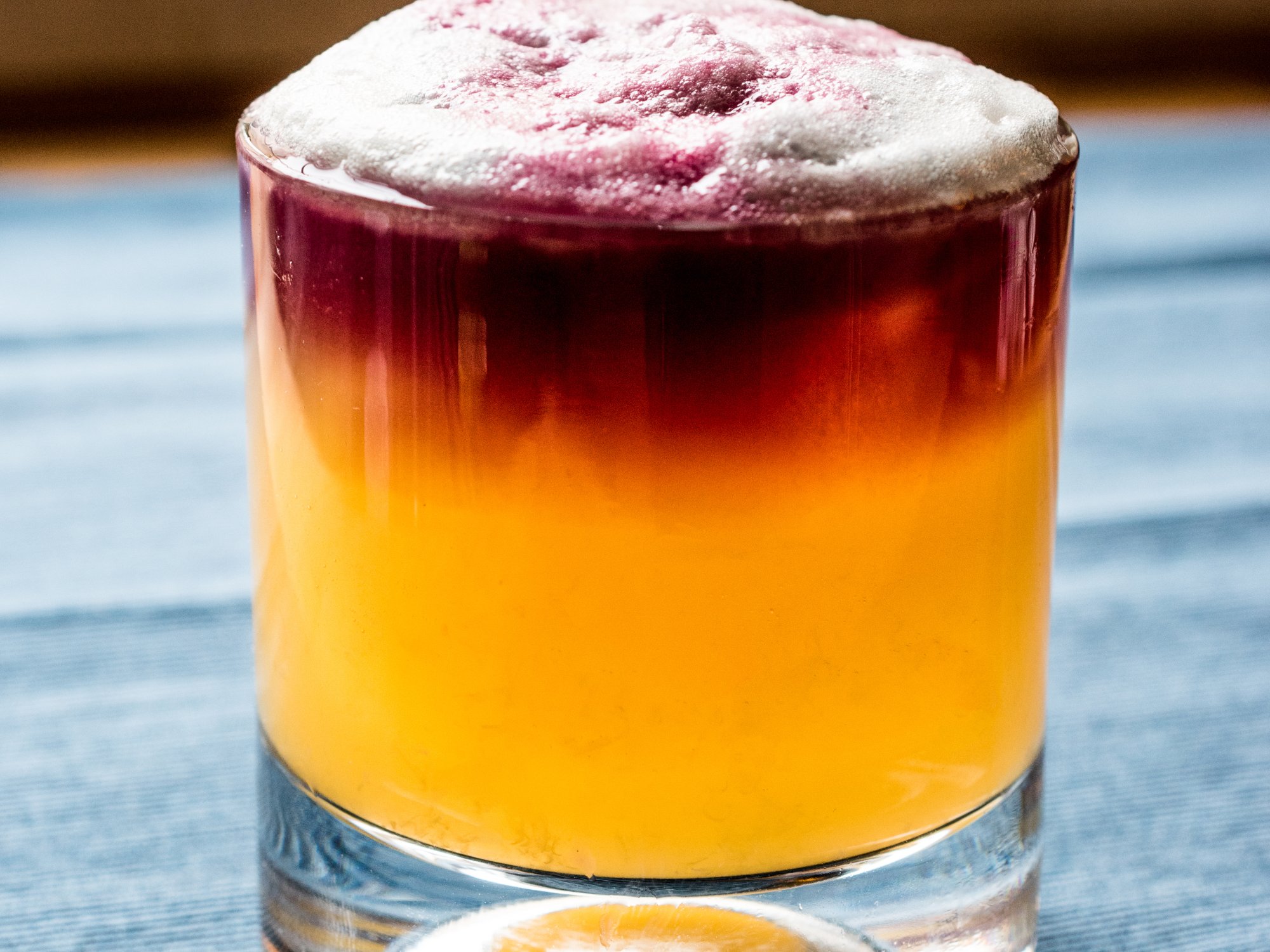
The New York Sour is a Whiskey Sour enhanced by a thin layer of dry red wine. The so-called Claret Snap adds color, a subtle bitterness, and a complex texture without overpowering the drink’s sour character. Balance is key: the red wine should not dominate but gradually blend with the Sour as you sip. The egg white variant creates a creamy foam that turns pink—visually stunning, though less sharply layered.
Here’s what you need for the New York Sour
6 cl Rye Whiskey or Bourbon Whiskey
3 cl fresh lemon juice
2 cl simple syrup (1:1)
1.5 cl dry red wine (e.g., Malbec or Merlot)
1 egg white (optional)
Lemon zest for garnish
Key points
The red wine must be dry and tannic—a sweet wine will make the drink cloying. I prefer a young Malbec with vibrant acidity, as it pairs better with whiskey than a heavy Bordeaux. The egg white trick: if using it, dry-shake it first with a pinch of salt—this stabilizes the foam and prevents it from collapsing too quickly. And when floating the wine: the spoon should only lightly touch the surface, or the wine will blend immediately. For extra precision, pour the wine over a sugar cube resting on the spoon—this slows the flow and distributes the wine more evenly.
Variations
- Continental Sour — Prepared identically, just under its original name. No differences in ingredients or technique.
- New York Sour without egg white — The classic variant without egg white. The red wine layer remains clearly visible, giving the drink a leaner, drier appearance. Particularly well-suited to Rye Whiskey, whose spice shines better without the egg white.
- Rosemary Sour — 1 cl rosemary syrup replaces the simple syrup. Pairs especially well with Bourbon Whiskey, adding a bitter, resinous note. The red wine should be extra dry here to avoid overpowering the herbal flavors.
Frequently asked questions
Can I use Scotch Whisky instead of Rye Whiskey?
Technically yes, but Scotch Whisky often has smoky or peaty notes that may clash with the red wine. If you must, choose a light, unpeated single malt like a Glenlivet. Better yet, stick with Rye or Bourbon—they naturally harmonize with the wine’s tannins.
Why does my New York Sour taste too sour or too sweet?
The balance depends on the lemon juice and simple syrup. Taste the Sour before floating: it should be lightly sweet-sour, not aggressive. If too sour, add 0.5 cl more syrup. If too sweet, reduce the syrup or increase the lemon juice by 0.5 cl. The red wine is not for correcting—it’s the crowning touch, not the balance.
Can I replace the red wine with another wine?
White wine or rosé won’t work—they lack tannins and body. Port is too sweet. If no dry red is available, try a dry Sherry (Fino or Amontillado), which also brings tannins and a nutty note. But classically, it’s red wine.
Why isn’t the red wine floating properly?
Either the Sour is too cold (the wine sinks faster) or the spoon was dipped too deep. Pour the wine extremely slowly over the back of a flat bar spoon. If the wine still sinks, the Sour may have been over-shaken—too much air dissolved in the drink drags the wine downward.
